
Digital pathology automation for cancer diagnostics
A global healthcare innovator needed a digital pathology platform that lets pathologists analyse tissue slides with high precision and score the biomarkers that drive oncology treatment decisions. Sequoia built the biomarker scoring models, the interactive slide viewer, the Python and Playwright automation around them, and owned quality assurance from requirements to release.
What was the platform for?
In oncology, the slide is where the decision starts. A pathologist looks at stained tissue and scores it. How much HER2 is expressed, how dense the CD8 infiltrate is, what the H&E morphology says about the tumour. Those scores decide which treatments are on the table for that patient. They are also slow to produce by eye, and they vary from one reader to the next.
The client wanted a platform that keeps the pathologist in charge of the diagnosis but takes the repetitive measurement off them. Algorithms quantify the biomarkers. The pathologist inspects, annotates and confirms. The scoring is consistent from case to case and the turnaround is shorter.
That meant three things had to exist and work together: models that can read the stains, a viewer good enough for a specialist to trust, and automation so the whole pipeline runs the same way every time. It also meant a level of quality assurance appropriate to software that sits inside a diagnostic workflow. This is the kind of work our digital pathology and imaging practice exists for.
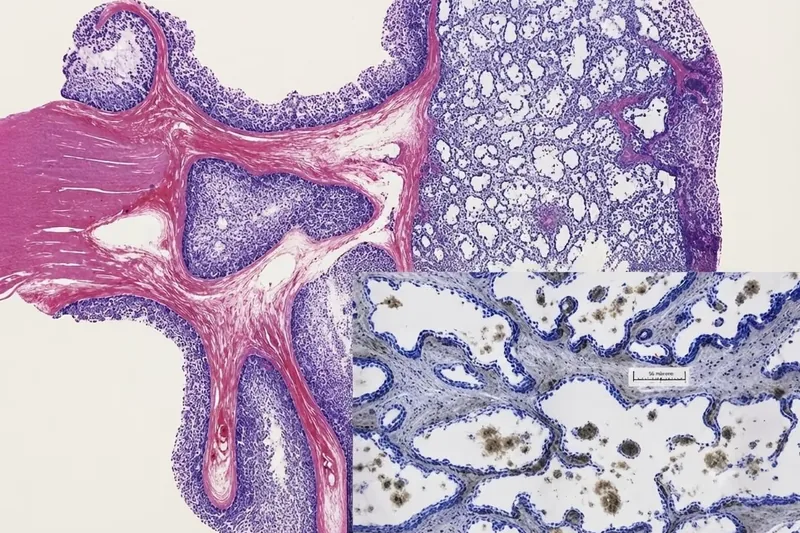
What did Sequoia build?
Four pieces of work, each with its own owner on the Sequoia side and each tested before it joined the rest.
Biomarker scoring models
Computational models that analyse staining for HER2, Trop2 and CD8, and work with H&E slides. They produce high accuracy scores that support detection and characterisation of cancer subtypes. The models measure. The pathologist decides.
Interactive digital slide viewer
A high performance viewer for real time inspection of whole slide images. Pathologists zoom, annotate and score samples in the same surface. Whole slide images are large, and a viewer that stutters at high magnification is a viewer nobody uses, so performance was treated as a feature rather than a polish item.
Pipeline automation in Python and Playwright
Slide scoring and analysis validation were automated end to end. Python carries the analysis. Playwright drives the platform's browser interface the way a user would, so a full scoring run and its validation happen without anyone clicking through screens. Runs became consistent, turnaround got shorter, and a whole class of manual errors went away.
Quality assurance, owned end to end
Sequoia owned the QA lifecycle: requirement gathering, test design, test automation and release sign off. Every release was checked for performance, usability and reliability before it shipped. For software that sits in a diagnostic workflow, the sign off is not a formality.
Why these four stains?
Each stain answers a different question about the tumour, and each has its own scoring convention that the models had to respect. In general terms, here is what a pathologist is reading in each one.
| Stain | What it tells the pathologist |
|---|---|
| HER2 | How strongly the tumour expresses the HER2 protein. The score helps decide whether HER2 targeted therapies are an option. |
| Trop2 | Expression of a cell surface protein that newer antibody drug conjugates are designed to target. Scoring it helps identify which patients those drugs may suit. |
| CD8 | The presence and density of cytotoxic T cells in and around the tumour. A read on how the immune system is engaging with it. |
| H&E | The standard morphology stain. Tissue architecture, cell shape and growth pattern, which is where a diagnosis usually begins. |
Scoring is where reader variation creeps in. Two pathologists can look at the same HER2 slide and land on different intensities. A model that measures the same way every time does not replace their judgement. It gives them a consistent number to judge against, and it does so in a fraction of the time.
Why automate slide scoring with Playwright?
Most pathology platforms are driven through a browser. Scoring a slide means loading it, running the analysis, checking the result against expectations and recording it. Done by hand, that is a sequence of clicks that varies slightly with every person and every day. Done through Playwright, it is the same sequence every time, and it can run overnight across a batch.
The same scripts do double duty. They are the production automation, and they are the regression suite. When a model is updated or the viewer changes, the same runs replay against known slides and flag any score that moved. That is how analysis validation stayed tethered to the release process rather than living in a spreadsheet somewhere.
It is not glamorous work. It is the work that lets a small team ship changes to a diagnostic tool without holding their breath.
What changed for the client?
| Area | What moved |
|---|---|
| Diagnostic turnaround | Automation and algorithmic slide scoring cut the time pathologists spend per case, so diagnoses come back sooner and the lab gets more through. |
| Clinical insight | Better biomarker analysis gives clinicians a clearer read on tumour biology, which supports more precise, more personalised treatment strategies. |
| Reliability | The QA framework cut production defects, which is what earns a platform trust in a clinical setting. |
The platform is not finished, and it is not meant to be. New AI features, sharper algorithmic precision and usability work are in active development. Future versions aim to bring in predictive analytics and deep learning models, which pushes the work further into what our AI for life sciences team does day to day.
What does this mean if you are building a diagnostic platform?
Three lessons carry over. The model is the smallest part of the system. The viewer and the automation around it decide whether a pathologist will use the scores, and whether the lab can run them at volume. Budget for those as first class work, not as wrapping.
QA cannot be bolted on at the end. When one team owns requirements, test design, automation and release sign off, the tests follow the intent of the feature rather than the shape of the code, and the sign off means something. If your platform touches a diagnosis, that ownership is worth paying for, and it dovetails with the validation work our regulatory and validation team does when a product heads toward a submission.
And browser automation is a legitimate production tool, not only a testing tool. If your platform lives in a browser, the same Playwright scripts that prove a release is safe can run the batch on Tuesday night. One honest caveat: that only holds if the interface is stable and the scripts are maintained alongside it. Treat them as product code. The bioinformatics and genomics side of the practice runs the same discipline on sequencing pipelines.
Questions people ask about this work
Which biomarkers does the platform score?
The computational models analyse staining for HER2, Trop2 and CD8, and work with H&E stained slides. Scoring these supports detection and characterisation of cancer subtypes and feeds the treatment decision. The list can grow as new stains matter to the client's diagnostic workflow.
What does the digital slide viewer do?
It lets a pathologist open a whole slide image, zoom to the cellular level, annotate regions and score samples interactively, in real time. It is the working surface for visual assessment alongside the algorithmic scores, and it was built for performance at high magnification because that is where specialists spend their time.
Why use Python and Playwright in a pathology pipeline?
Python carries the image analysis and scoring code. Playwright drives the platform's browser interface end to end, so slide scoring and analysis validation run without a person clicking through each step. The result is repeatable runs, shorter turnaround and fewer manual errors, and the same scripts serve as the regression suite.
Who owned quality assurance on this platform?
Sequoia owned the QA lifecycle end to end: requirement gathering, test design, test automation and release sign off. Each release was checked for performance, usability and reliability before it went out. That framework is what brought production defects down.
Is the platform still being developed?
Yes. New AI features, better algorithmic precision and usability improvements are in active development. Future versions aim to add predictive analytics and deep learning models. If you are planning a similar platform, start a conversation and we will walk through what we would do first.
Building a slide analysis platform pathologists will trust?
Tell us the stains, the workflow and where it has to run. We will come back with an approach and a team.
Start a conversation